
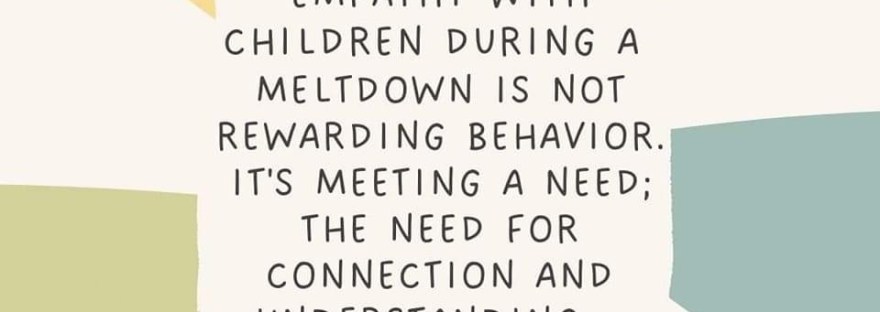

You are courageous when you choose to respond differently to your child’s needs than what you may have been shown as a child. You are healing through the change of mindset and behavior response. Yet- lets be real- unlearning is HARD and it takes a lot of heart and inner work.
This is what brings me to this reflection blog entry. My eyes are poofy, I’m stuck in overreflection and hoping that I did the right thing in response to some big feels from my pre-teen (<– that in-itself is hard to read!)
One of the hardest things to hear is “I hate you” alongside a whole bunch on emotionally driven responses from your child. To encapsulate the complete experience would take me to be sitting with you sharing the whole scenario, though let me give a window in so you’re able to connect it to growth not grief.
So here goes. We get home from school. It’s been an energy consuming day, not necessarily bad, just took a lot of cognitive and physical energy investment. It was most definitely time for a break. Yet, my yet to be fully developed brain’d child was struggling to get “comfortable” and get what she needed to relax. Therefore, here I come in- to see how I can “support her.” Well, I wasn’t fast enough and I surely didn’t have the exact information she needed to solve her tech problem. And then it came out- “You’re the worst mom in the world, I hate you, leave me alone.” Ouch. It dug in a little. I was doing the best I could, providing the support and love I thought she’d been seeking, yet I get this level of feedback. Not my favorite moment.
Yet, how I responded is what took conscious decision making. I could have equally raised my voice (to supposively demonstrate confidence and contell right?!) and taken away her electronics for talking to me like that- what most of our generation’s parents most likely would have done. Yet I didn’t. Hear me out.
First, I chose not to be defensive and lecture. I could have taken the opportunity to plead my case for being the best mom that she could have asked for and express my unconditional, unwavering love for her, but I didn’t. I could have shown my hurt through expressing anger (the yelling thing our survival brain likes to lead us to do), but I didn’t. I sat there, let her process her feels, despite how big and targeted they were and listened. Then I said, “I hear how hard this is for you. Would you like me to stay here to listen or would you like some time to self?” She then pronounced clearly, “I told you to leave me alone- so go!” Upon which I replied, “Ok, I’ll be in the living room and will come check in with you. 5 minutes or 7 minutes?” She declared 7 minutes and I took a much needed break (my heart rate and the tension in my body needed stabilizing too!).
When I returned, her tone of voice was lowered, her body more calm (slumped in chair not standing up in distress), so I knew she was more receptive. I quietly requested, “May I sit close to you? Or would you like me to stand over here?” She quietly grumbled, so I chose to sit further away and remain quiet but calm. She then asked me to open her fidget and slowly we connected in preferred topic convo. I let her lead the way in restoration. She eventually came to me and sat in my lap and sought body compression for calm which led me to check in by acknowledging that she was feeling big feels and she proceeded to apologize for saying hurtful things when she was mad.
This is an example of restoration. This is a clear example of growth through coregulation over control. This example may be uncomfortable reading as you may have the automatic response or programming to think “no way, electronics are taken away and she should never talk to you like that!” I get it. Unlearning is NOT an easy process- it’s kind of like reprogramming an operating system that’s been functioning for 40 years. It’s not easy and unfortunately, it takes practice and experiences to experience the impact of slowing down to connect and not control, yet each time you try- you’ll feel the value of your efforts.
In conclusion, I know my parents were incredibly impactful in my childhood. They did their best to provide me opportunities to thrive and make a positive impact on the world around me. I don’t have any discipline traumas to speak of because I felt my actions were coupled with appropriate discipline response. Yet now being a parent myself and after powerful conversations and reflections with my parents, it’s been beautiful to discuss how parenting has been so different for me as it was for them. Therefore, I encourage you to reflect on how you’re building resiliency in the youth that you lead. Are you responding or are you reacting? If my reaction was bigger than I/they liked, how can I reconnect for restoration? Am I aware of the nuances of the needs of my child? How am I managing my emotions and how am I modeling emotional response?
To wrap this up, please remember, parenting is a process and the more you can reflect on the progress, you will continue to make great impact. Each child (and human) are designed beautifully different and each generation has varying social and emotional influences, thus we need to continue to commit to being responsive (not reactive), compassionate (not controlling) in order to build resiliency in this new generation.


 Sensational Synergy