

person holding babys hand
Parenting

Parenting with Emotional Synergy

Synergythe bonus that is achieved when things work together harmoniously.” – Mark Twain

As a parent, I always want the best for my child. She’s my one and only. In her first decade of life, I have learned more about myself through her. She’s opened my eyes to many things I never saw in myself.

She’s shown me that I can be courageous while also being cautious. I can be strong, while also being sensitive. She has empowered me to embrace my true self and in this authenticity, I believe in our capacity to do great things, even when they aren’t easy.

Now, for a little bit of “Title” tossing-out. My daughter and I have both been officially diagnosed with Generalized Anxiety Disorder. With this, we are able to support each other’s challenges with compassion and connection. Yet, that doesn’t mean it’s easier because of empathy. Our emotions and stress can still get in the way of our daily functioning, but we can support each other without judgement.

Secondarily, through my own personal journey, I have discovered that I am an Enneagram 9 and most definitely considered a “Highly Sensitive Person.” Yes, that means that I have a big heart and care about others, yet it’s also a genuine physical and emotional experience for me. I feel more deeply and experience life more richly.

Lastly, my sweet daughter has challenges with Sensory Processing Integration. What this means is that her brain has a difficult time processing the sensory information it receives which can create heightened physical and emotional responses. In other words, her brain in uniquely designed to deeply experience her daily life.

Generalized Anxiety (GAD). Highly Sensitive (HSP). Sensory Processing Integration( SPiD). These terms or labels are not deficits, they are strengths and will continue to build resiliency through connection and reflection.

With this, I had an experience that helped me realize that not everyone has this ‘feel deeply’ experience.

I’d like to provide this scenario to help generate some truths behind navigating parental challenges. Again, my daughter has a beautifully designed nervous system that leads her to embracing life deeply. She is courageous and brave while also timid and tense. Therefore, when conflict arises, she can sometimes react bigger than expected.

For example, when she felt her friends weren’t listening, she told them that she “hated them.” Which then led to responses like “you’re overreacting” and “you’re mean.” Developmentally, this is a ‘sometimes expected’ response. Pre-teens are navigating how to best express themselves emotionally and most often its more intense than they even expect it to be.

This is where the unique awareness for myself as a parent came in. When I read about this interaction (virtual exchange between school friends), I recognized the somatic experience it gave me. I felt those tingles and numbness that you’d feel when someone said or did something hurtful. It was interestingly an empathetic physical response. I felt as if the words were spoken to me. And this is where I am grateful for my awareness that can lead me to a rational response.

My nervous system response led me to an emotional response of sadness and a physical reaction of numbness and wide-awake-ness. Oh did I mention it’s 1:30 am as I write this? Probably not because I know I should be sleeping yet my emotional processing has me physically wide awake.

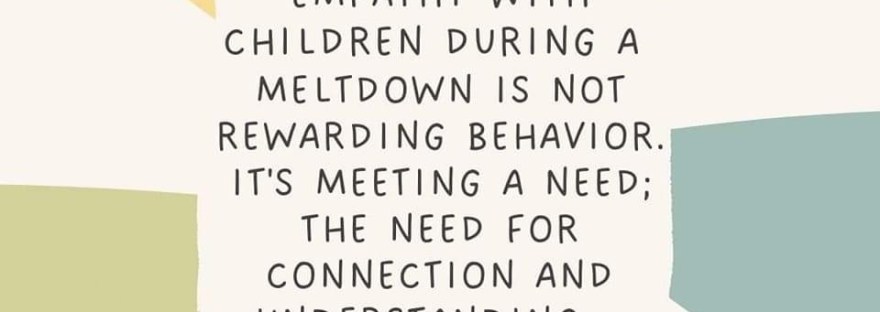
Going back to the scenario, I ask myself, How can I support my child through validation (of her big feels), reflection and restoration?

I have learned what I shouldn’t and won’t do- have an immediate response of anger, punishment and shaming behaviors. Unfortunately this is the typical-ish response in parenting- respond with intensity to eliminate behavior. By doing this, it simply invalidates emotional and social development and shuts down the ability to grow through the hardship.

Do I believe in accountability- you betcha. Yet how the accountability is communicated is the key element in this scenario, I mindfully choose my language and best frame my reflection questions with curiosity not shame. The “tell me more” request remains the most powerful statement. When I am able to validate the feelings she’s sharing with me, it also creates a safety that builds her resiliency as well as self-compassion.

By investing my energy into seeking to understand, it encourages my daughter (and others) to re-evaluate the situation and be able to become more collaborative in problem solving. Now because of this, I am hopeful that when scenarios arise such as the one shared above, I will be able to remain compassionately curious, not concerned about the outcome of the hardship.

I genuinely want the best for my daughter and will remain intentional about my self-awareness of my response and do my best to empower resilience through authentic emotional processing. I will need practices like these (written reflection and communication) in order to remain calm and curious when supporting the social and emotional challenges that may arise.

For encouragement, when you are invest in your self-reflection and awareness of your reaction and response to the events and experiences of parenting, you are a great parent. There is power in restoration because you’re not always going to get it right. You’re human. By getting to know yourself and your child, you’ll experience the synergy to be able to work together and do hard things.

black and white laptop
Photo by Prateek Katyal on Pexels.com
Parenting, Reflections

Intergenerational Relational Healing

You are courageous when you choose to respond differently to your child’s needs than what you may have been shown as a child. You are healing through the change of mindset and behavior response. Yet- lets be real- unlearning is HARD and it takes a lot of heart and inner work.

This is what brings me to this reflection blog entry. My eyes are poofy, I’m stuck in overreflection and hoping that I did the right thing in response to some big feels from my pre-teen (<– that in-itself is hard to read!)

One of the hardest things to hear is “I hate you” alongside a whole bunch on emotionally driven responses from your child. To encapsulate the complete experience would take me to be sitting with you sharing the whole scenario, though let me give a window in so you’re able to connect it to growth not grief.

So here goes. We get home from school. It’s been an energy consuming day, not necessarily bad, just took a lot of cognitive and physical energy investment. It was most definitely time for a break. Yet, my yet to be fully developed brain’d child was struggling to get “comfortable” and get what she needed to relax. Therefore, here I come in- to see how I can “support her.” Well, I wasn’t fast enough and I surely didn’t have the exact information she needed to solve her tech problem. And then it came out- “You’re the worst mom in the world, I hate you, leave me alone.” Ouch. It dug in a little. I was doing the best I could, providing the support and love I thought she’d been seeking, yet I get this level of feedback. Not my favorite moment.

Yet, how I responded is what took conscious decision making. I could have equally raised my voice (to supposively demonstrate confidence and contell right?!) and taken away her electronics for talking to me like that- what most of our generation’s parents most likely would have done. Yet I didn’t. Hear me out.

First, I chose not to be defensive and lecture. I could have taken the opportunity to plead my case for being the best mom that she could have asked for and express my unconditional, unwavering love for her, but I didn’t. I could have shown my hurt through expressing anger (the yelling thing our survival brain likes to lead us to do), but I didn’t. I sat there, let her process her feels, despite how big and targeted they were and listened. Then I said, “I hear how hard this is for you. Would you like me to stay here to listen or would you like some time to self?” She then pronounced clearly, “I told you to leave me alone- so go!” Upon which I replied, “Ok, I’ll be in the living room and will come check in with you. 5 minutes or 7 minutes?” She declared 7 minutes and I took a much needed break (my heart rate and the tension in my body needed stabilizing too!).

When I returned, her tone of voice was lowered, her body more calm (slumped in chair not standing up in distress), so I knew she was more receptive. I quietly requested, “May I sit close to you? Or would you like me to stand over here?” She quietly grumbled, so I chose to sit further away and remain quiet but calm. She then asked me to open her fidget and slowly we connected in preferred topic convo. I let her lead the way in restoration. She eventually came to me and sat in my lap and sought body compression for calm which led me to check in by acknowledging that she was feeling big feels and she proceeded to apologize for saying hurtful things when she was mad.

This is an example of restoration. This is a clear example of growth through coregulation over control. This example may be uncomfortable reading as you may have the automatic response or programming to think “no way, electronics are taken away and she should never talk to you like that!” I get it. Unlearning is NOT an easy process- it’s kind of like reprogramming an operating system that’s been functioning for 40 years. It’s not easy and unfortunately, it takes practice and experiences to experience the impact of slowing down to connect and not control, yet each time you try- you’ll feel the value of your efforts.

In conclusion, I know my parents were incredibly impactful in my childhood. They did their best to provide me opportunities to thrive and make a positive impact on the world around me. I don’t have any discipline traumas to speak of because I felt my actions were coupled with appropriate discipline response. Yet now being a parent myself and after powerful conversations and reflections with my parents, it’s been beautiful to discuss how parenting has been so different for me as it was for them. Therefore, I encourage you to reflect on how you’re building resiliency in the youth that you lead. Are you responding or are you reacting? If my reaction was bigger than I/they liked, how can I reconnect for restoration? Am I aware of the nuances of the needs of my child? How am I managing my emotions and how am I modeling emotional response?

To wrap this up, please remember, parenting is a process and the more you can reflect on the progress, you will continue to make great impact. Each child (and human) are designed beautifully different and each generation has varying social and emotional influences, thus we need to continue to commit to being responsive (not reactive), compassionate (not controlling) in order to build resiliency in this new generation.

woman holding brown paper cup
Reflections

Bandwidth: Capacity to Contribute

I’m drained. I’m done. I am empty.

These are words you say when you are physically, emotionally or socially exhausted. You have limited capacity to contribute.

I’ve said this myself and have most definitely have heard it amongst my peers. Overwhelm. Fatigue. Burnout. The reality of servant leadership is when you spend your energy caring for others, it often leads to physical, emotional or mental fatigue. The degree upon which you feel this fatigue is based on frequency and duration of the support you provide as well as receive. Therefore, its incredibly important to stay connected with others and honest in our self-reflection of our well-being.

With this, I was having a great conversation with a great friend and mentor of mine. When we were debriefing about the heightened stress in teachers and students, she re-explained the “flipped lid” theory from Daniel Siegel. Let me explain this reimagined model.

Using the “hand model,” of the brain, imagine this:

  • Make a fist with your hand by putting your thumb in your palm and closing your fingers over your thumb
  • Move your fingers up in the fist so your fingers are only bent at second knuckle (barely covering your thumb but still a closed fist)

This now represents a modified “hand model” of the brain where the amygdala (represented by the thumb) is more exposed and less protected by our cortex (represented by our fingers).

When your stress response is active, similar to the modified ‘hand model,’ it doesn’t take much stimulus for your stress response to activate. A pencil drop, an unexpected sound or situation, your nervous system goes into fight, flight or freeze automated response.

With this, I want you to notice something.. do you find yourself ‘managing’ your ‘bandwidth’ until it’s fried or burnt out? A lot of us do. And this ‘bandwidth management’ is clearly or invisibly impacting our health and relationships. And this is why it is so incredibly important for you to understand our nervous system so you can be more attune to body signals when managing your ‘bandwidth.’

Let’s be honest. We’ve been recovering from collective community trauma (aka world pandemic and more), so our ‘bandwidth’ has been constricted and our stress response system has been highly active. Therefore, your nervous system has been in overdrive on a daily basis. Again, another reason why it’s important for you to understand healthy ways to manage your bandwidth.

So, what should you do? How can you balance your daily energy withdrawls?

Let me provide some short and sweet suggestions (as time is a deposit AND a withdrawl):

  1. Sensation Self -Check: Are you feeling tense? Are you feeling tired? Are you feeling cold? These body signals are indicators that your nervous system is actively managing your stress and is signaling a slow down for your mind and body. You don’t need to do anything drastic to pause- simply stop and reconnect with your body through breath and grounding techniques.
  2. Name it to Tame it: No need to go tell someone, but if you have a safe person- you can go to them to share your ‘bandwidth’ support need. Yet, you can also use self-talk and tell yourself to pause and tell yourself “my bandwidth needs some support, so I could… (insert strategy here).”
  3. Distract your energy with a low-level or engaging task: Turn on music, go to the bathroom, tidy up your desk, go for a mini-walk. Something that takes little to no cognitive energy. This will give you a mini boost to your bandwidth. When you can take 90 seconds- 2 minutes to shift and settle your energy use, it provides you enough endorphins to reset and return to the more demanding tasks of your day.

When you take care of your emotional, cognitive and relational energy, you will find yourself responding more effectively in stressful situations. You’re working from the reasoning part of your brain (cortex) rather than your fight or flight (amygdala) part of your brain.

With this, I want to encourage you to not feel the pressure of having to do a lifestyle change in order to restore your bandwidth. It truly is a mini-moment investment and awareness of restorative experiences. Taking the two minutes to disconnect from a stressful circumstance can empower you far more than you expect. You manage stress to varying levels throughout your day. May you find the moments to restore your bandwidth to build your capacity to do all of the great things you can do!

woman holding brown paper cup
Photo by Maria Tyutina on Pexels.com
Reflections

Checking Your “Engine” Meditation Moment

As we are here together and you are actively listening to what I am sharing, I want you to settle in where you are. Try to find your body’s rest point and fall into that space. Once you’ve found your comfortable position, take a slow breath in through your nose, feeling your body melt into the position you are anchored at, and release a slow, steady exhale out.

Today we are going to explore our internal engine. We are going to check it’s rpm’s and how our engine is running. As you are listening, put your right hand onto your chest. Take a moment to connect to your “engine” that’s running. Is the motor “purring” or in idle? Is it revving it’s engine, ready to move forward to the next thing? Or is it steady on a cruise? You can check it’s status by the rate of your heart (beating fast, slow, steady) and the depth of your breath (shallow, deeper).

As you connect with your engine, let’s also attune to the other parts of our vehicle. Let’s bring our attention to our feet. Do you sense tension or grounding in your toes? Do you feel like you have good “traction?” If not, give your toes a squeeze and release or rotate your ankle to check in with the “pressure” within your foot to empower your toes.

Next let’s go upward to your navigation station (your head). At this moment, let’s place your hand back into a comfortable position. Let’s then close our eyes (if you’re comfortable) and do a small head rotation in whichever direction your body leads you. Let’s do two rotations, slow and steady. As you do so, pay attention to your breath. Are you holding your breath or are you still able to control your breathing pace? If you need to take a cleansing breath, please do so now.

As you continue to listen, let’s discuss how your navigation station is impacting your engines pace and readiness. First, your breathing is the key power to the capacity of your vehicle. You breathe in the air to empower and release the toxins when nutrients are absorbed as needed to safely pace the engine. If you breathe in too hard, too fast, sometimes the engines stalls. If you don’t breathe in and out deep enough, the engine will need to be serviced sooner than if you focused on taking in deep breaths as the engine is always going.

As we wrap this up, I invite you to take a steady breath in, feeling your engine with your hand on your chest, and as you slowly exhale, wiggle your toes and rotate your head slowly so you navigation station and traction is set for a safe pace to your day. Thank you for checking your engine and getting ready for a great opportunity for smooth cruising.

Inspired by article: https://insight-international.org/amygdala-hijack-getting-back-into-the-drivers-seat

Reflections

The Power of Reflection

 “Reflection is one of the most underused yet powerful tools for success.” -Richard Carlson

Reflection is defined as “serious thought or consideration” – yet it does NOT necessarily need to be revolutionary, deep or profound. It can be simple and seemingly useless as our thoughts can progress to great ideas and decisions. Therefore, I welcome you to a shift in the definition of reflection: “a thought generated by experience, new knowledge, or conversation.” With this, lets dive in using this self-generated definition of ‘reflection.’

Over the last month or so, I have once (or twice) been reminded that “what we pay attention to- grows.” If I wasn’t such a human, I would have noticed the cultivation of “seeds of thought” that I was actually “watering” rather than “uprooting.” Therefore, I want to encourage you to be self-aware today. What are you noticing? Do you find yourself drawn to certain details? Is this a “planted seed” that you are unintentionally ‘watering’? Rather, is it a “seed” that you’re TRYING to plant but the soil is not “rich” enough? Essentially- What thoughts do you want to nurture and which would you like to weed out?

A great mentor of mine and I were in a deep conversation about what brings us life. Breath. Connection. Self-talk. How we narrate our lives (the consistent scroll of thoughts in our head) is what leads us to decision making and how we perceive our self and others. Therefore, the power is within. How can we build attunement to our thoughts and self-talk? Do we have courage to truly listen to the thoughts in our head? I think there is power in journaling. As a writer, I think reading my thoughts is the purest centering to my soul.

Therefore, I propose a call to action: Take 10 minutes (or 5) and just write down the thoughts going through your head. I encourage you to do this every day at the same-ish time for the next 5 days. I can’t help but be twitterpaited to think of the discoveries you’ll make about yourself. Again, the power is within.

“Your life is a reflection of your thoughts. If you change your thinking, you change your life.” -Brian Tracy

Now- some context. The world around us is spinning. Well it’s always been rotating, but with all that is intensely circling around us, it’s also spinning. With everything that’s disrupted our lives in 2020, I would not be surprised if the earth’s speed of rotation is also impacted. #realworld2020 Though we may be in the middle of a world-wide pandemic, crazy politics, wildfire tragedy, and more, our world has seen tough sh’t before. Therefore, I can’t help but look back to some past leaders during revolutionary and challenging times and be inspired by how they overcame.

Oh my gosh. If you haven’t seen Hamilton yet. Stop reading. Watch it RIGHT now. It’s UH-MAZING. There aren’t words.

Ok, the historical author and activist I will be referring to did NOT appear in Hamilton, yet, he’s still one of the influential figures in the revolution. He authored The Common Sense and the American Crisis (influential pamphlets at the start of the American Revolution). He was an inspiration to the Patriots as they were fighting for independence from Great Britain. So yes, he was an influencer during hard a$$ times. Thomas Paine. Thank you for leadership and influence. Your words still resonate with current world times. Here are some of his notable words:

The real man smiles in trouble, gathers strength from distress, and grows brave by reflection.”

How did that ‘stick’ with you? What thoughts were generated? Read it again if needed. Feel the words and let thoughts generate. You’re encouraged to jot, draw, captivate or conversate about anything that moved you.

Circling back, today is YOUR day to connect with your thoughts and make note to what they cultivate. How do your thoughts create action and interaction? As you reflect (the most powerful action you can take)- be open to how it builds you. You can only grow by looking inward. Enjoy your attunement and reflection as you navigate a new day!

“Without reflection, we go blindly on our way, creating more unintended consequences, and failing to achieve anything useful.” -Margaret J. Wheatley

What is Self-Reflection and Why it Matters for Our Wellness? Psychology Today article to support your application of these practices: https://www.psychologytoday.com/us/blog/click-here-happiness/201910/what-is-self-reflection-and-why-it-matters-wellness